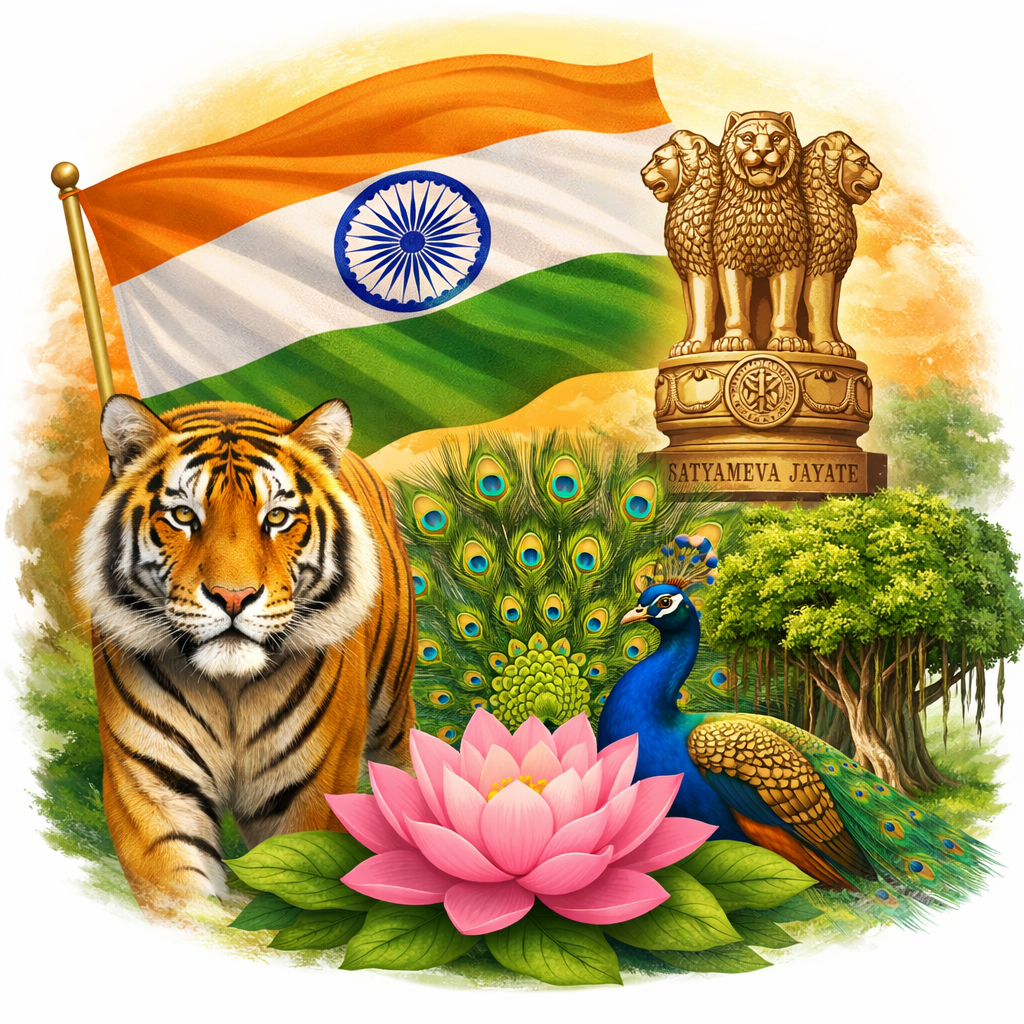
National Symbols of India
National symbols represent the spirit, identity and shared values of a nation. In India, these symbols remind citizens of a long cultural history, the struggle for freedom and the ideals on which the country stands today. They help create a strong sense of unity among people who speak different languages and follow different traditions.
—
The National Flag
The National Flag of India, commonly called the Tricolour, has three horizontal bands of saffron, white and green, with a navy-blue Ashoka Chakra in the centre.
Saffron stands for courage and sacrifice, white stands for peace and truth, and green represents growth and faith in the future.
The Ashoka Chakra, with its twenty-four spokes, symbolises law, movement and continuous progress. The flag is a powerful reminder of national responsibility and respect.
—
The State Emblem
The State Emblem of India is adapted from the Lion Capital built during the reign of Ashoka. It was discovered at Sarnath.
The emblem shows four lions standing back to back, representing strength, courage and pride.
Below the lions appears the motto Satyameva Jayate, which means “Truth Alone Triumphs.” This message reflects the importance of honesty and justice in public life.
—
The National Anthem
The National Anthem, Jana Gana Mana, was written by Rabindranath Tagore.
The anthem celebrates the unity of the country and honours its people and regions. It is sung on national occasions and inspires feelings of respect, dignity and patriotism among citizens.
—
The National Song
The National Song, Vande Mataram, was composed by Bankim Chandra Chattopadhyay.
This song played an important role during the freedom movement. It expresses deep love for the motherland and became a source of inspiration for freedom fighters across the country.
—
Natural National Symbols
National Animal – Royal Bengal Tiger
The Royal Bengal Tiger represents power, bravery and grace. It also reminds people about the need to protect wildlife and preserve forests for future generations.
National Bird – Peacock
The peacock symbolises beauty, elegance and cultural richness. It appears widely in Indian art, dance and traditional stories.
National Flower – Lotus
The lotus stands for purity, hope and strength. It grows in muddy water but remains clean and beautiful, teaching the value of rising above difficulties.
National Tree – Banyan
The banyan tree symbolises long life, unity and shelter. Its wide branches and roots reflect togetherness and support.
—
Conclusion
The national symbols of India are more than official signs or images. They express the nation’s ideals, honour its history and encourage citizens to remain united and responsible. By respecting these symbols, people remember the sacrifices of the past and renew their commitment to truth, harmony and progress.
National Symbols of India – General Knowledge